SOS start a business.png
An official website of the State of Georgia.
The .gov means it’s official.
Local, state, and federal government websites often end in .gov. State of Georgia government websites and email systems use “georgia.gov” or “ga.gov” at the end of the address. Before sharing sensitive or personal information, make sure you’re on an official state website.
Still not sure?
Call 1-800-GEORGIA to verify that a website is an official website of the State of Georgia.
January 21, 2026
Last year marked a major change in how users experience online content, thanks to Generative AI. Use of Google’s AI-generated search summaries, known as AI Overviews, grew exponentially. First launched in the U.S. in May 2024, only about 6.5% of searches displayed an AI Overview in January 2025. By May, that became roughly one out of every five searches. By the end of summer, it was just over half. As we begin 2026, AI search summaries have become a standard part of our online experience.
Informational queries are the biggest trigger for AI Overviews, so search queries that are longer, written in the form of a question, and in a more natural conversational style are more likely to have one. They tend to appear when clear, factual, more generalized answers matter more than a specific brand or product comparison. How-to guides, explainer content, or niche educational topics will likely trigger AI Overviews.
So if your organization’s services are more informational than transactional, you’re more likely to be impacted by the rise of AI Overviews. If you have a lot of explainer or how-to content on your website, or you deal with niche topics or audiences, the same is true — and it will be especially important for you to be prepared for the shift in user experience.
AI is changing more than just online search. It’s reshaping how users find and interact with digital content. Nilay Patel, editor-in-chief of The Verge, coined the term “Google Zero” in 2024, saying it’s “that moment when Google Search simply stops sending traffic outside of its search engine to third-party websites.” OpenAI recently announced it’s launching Atlas, an AI-based browser to compete with Chrome. Users are increasingly turning to AI applications like ChatGPT to answer complex process questions. As AI transforms how users interact with website content, we have transitioned from traditional SEO (search engine optimization) to GEO (generative engine optimization).
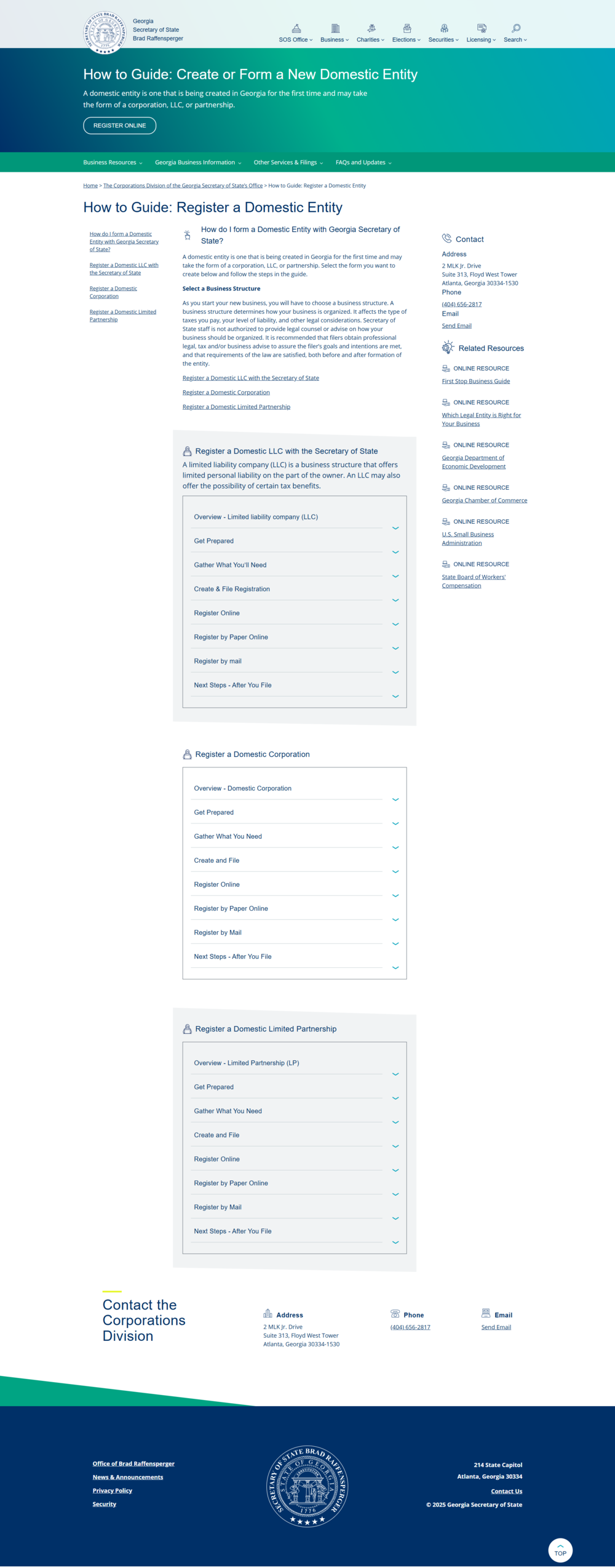
This transition means the way users view and interact with your content will change. Traditionally, users would view content on an agency website exactly as the agency designed it, like the Secretary of State’s information on how to start a business In Georgia.
But we’re quickly transitioning to a scenario in which a user may view your content via Gen AI tools. For example, they ask ChatGPT how to start a small business in Georgia, and it synthesizes information into a step-by-step how-to guide.
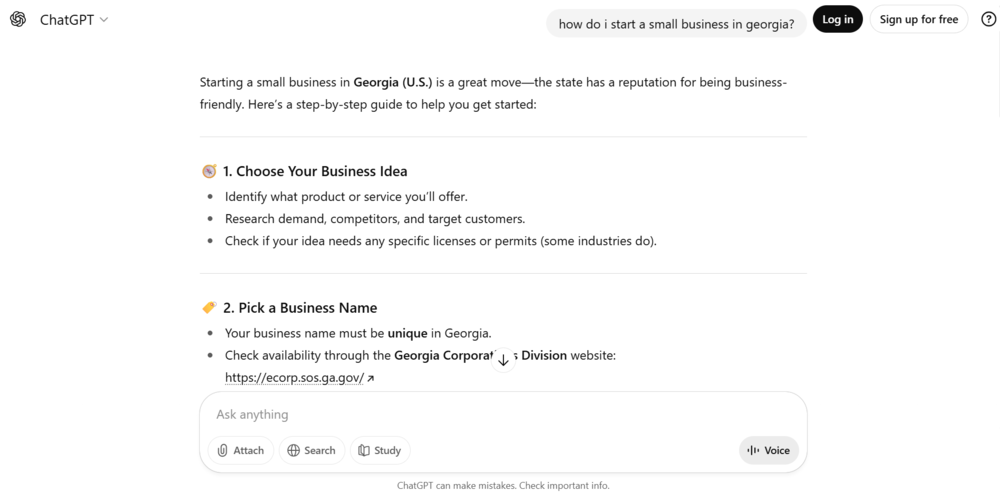
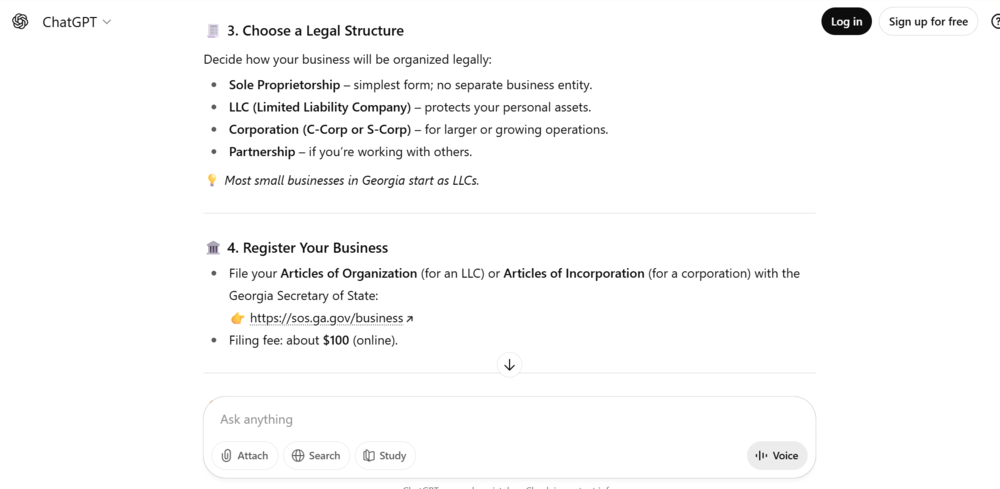
Now the challenge is: how do you make sure your information shows up, is correct, and makes sense outside the context of your website?
The good news is public sector organizations that have been adhering to best practices in design, user experience, and accessibility are already in a strong position when it comes to AI content readiness.
As a government organization, some key factors work in your favor. Just like traditional SEO, AI prizes authority. Government, educational, and peer-reviewed research websites are sourced more often. Pew Research found that government websites appeared in 6% of AI summaries vs. just 2% of traditional searches, so public websites are already increasing their share of voice.
In other good news, existing best practices increase the likelihood of your information showing up in AI-generated answers.
Content written as a clear, direct answer can make it more likely to be cited by AI systems. Structured content helps clarify the format of content when it’s being crawled. Utilizing structured content types like the How Do I, FAQ, and formatted lists will help GenAI crawl, make sense of, and retrieve your content for users.
A Q&A-style format is easier for systems to identify and aligns with user intent, but it has to be complete — one question and one answer covering a small part of a larger process will lack context and completeness. Provide the complete process for a task or service. Keep content about the same topic grouped together and use phrasing that directly answers the question asked.
As our team has tested AI Overviews and ChatGPT results, we’ve seen that How Do I content from GovHub tends to be retrieved more often, and the displayed results are closer to the original content from the website.
AI systems are built to interpret and use natural, conversational language, making plain language standards more important than ever. AI tries to mimic the tone and level of a query, so think about the terminology your audience uses and make sure you’re matching that. When you write, keep in mind that as of 2023, an estimated 130 million U.S. adults (or 54% of those aged 16-74) read below a sixth-grade level. Simplify wording wherever possible; use clear, concise language, and avoid vague wording or jargon.
Content that adheres to traditional best practices — that is complete, up-to-date, relevant, accessible, and written in plain language — is more likely to be AI-ready and sourced in AI search summaries and answers.
You don’t have to be on the GovHub platform to utilize the structured How Do I format. Best practices for structuring and writing instructional content can be applied across all types of content management systems.
Assume no prior knowledge on the part of the user. Explain things clearly, step by step, keeping in mind that there may be steps or information you’re leaving out because you assume users already have a certain level of familiarity with the topic. We often recommend testing your HDI content with people outside your department or organization to see if it makes sense to a user with little to no knowledge of the subject matter.
Your content is more likely to be retrieved and displayed closer to its original state if it covers a complete process from start to finish (think HDI rather than a FAQ). HDIs should detail every step in a process, but only include the information a user absolutely needs to know in order to accomplish their task.
Plain language means no jargon, but also no marketing language. If you're giving someone directions to the local grocery store, in the rain, and they're in a hurry, you wouldn't tell them about this great restaurant, and the ice cream shop nearby, and why it's a wonderful town to visit. They need clear, succinct directions to accomplish their goal.
About 40% of users on Georgia.gov are stress cases. Depending on your agency, that percentage could be even higher. These users are in an urgent situation, have less tolerance for a frustrating web experience, and are more likely to give up and start calling any staff they can get on the phone. They're not going to read a lot of extraneous detail. Even if it's not an emergency, they want to quickly get only the information they need in that moment.
Perhaps one of the most important principles of AI content readiness is learning to write for intent rather than keywords. Gen AI aims to determine what a user is trying to do rather than just answering the question as written. Think about what a user is really asking, what they’re trying to accomplish, and write to help them achieve that goal.
One advantage of the How to Do I content type is its flexibility. You can adapt your HDI formatting to suit your content needs, but we find using the same basic structure leads to success with users and Gen AI.
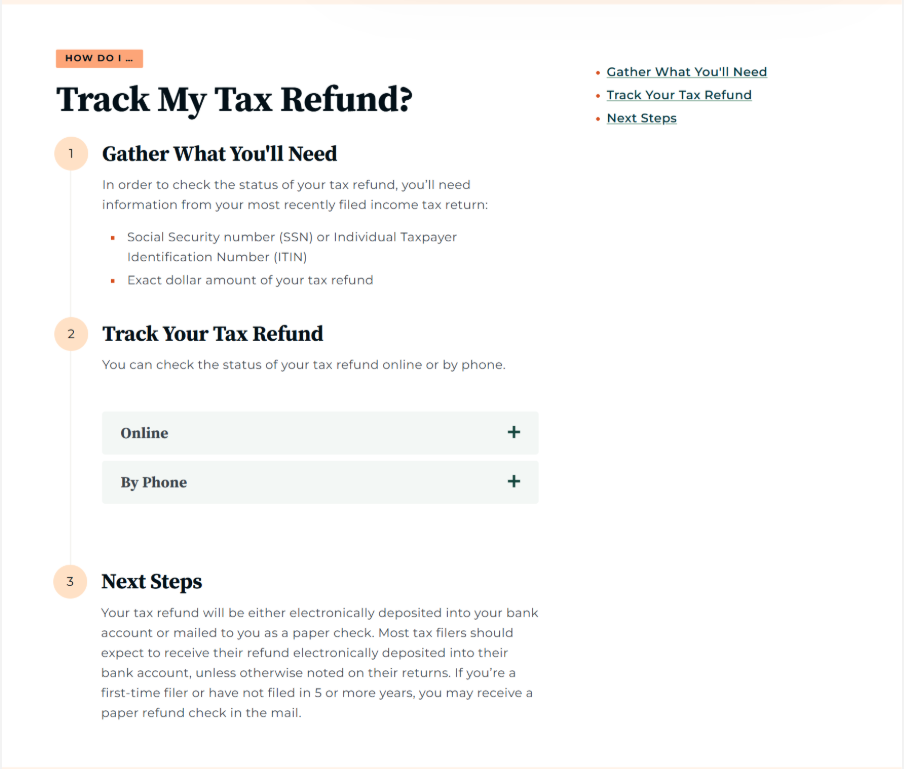
Structured content like the How Do I sets you up for success. It possesses all the characteristics favored by GenAI for retrievability: the content is structured, in numbered or bulleted list format, has all of the information in one place, uses a Q&A style, and is written in plain language. Its easy-to-understand, sequential instructions for completing a multi-step task streamlines the user's experience and allows them to access services with less agency involvement.